International Afghan Enlightened Women (IAEW)
IAEW is an initiative that began its work in Afghanistan in 2018. The organization was officially registered in Kabul in 2020. However, following the return of the Taliban to
power,in August 2021 we sought to register the organization in Malmö, Sweden, in order to continue our work legally and safely.
All our members work voluntarily. We have active members in several Afghan provinces, including Kabul, Jalalabad, Kunar, Ghor, Paktia, Faryab, Mazar-e-Sharif, and Herat, and we
are working to expand our reach to more remote areas, especially in provinces like Faryab where women face significant barriers to access.
In the beginning, our primary aim was to raise awareness among Afghan women about their rights and to provide urgent support, such as medical assistance for children whose mothers are the sole breadwinners. However, as more women turned to us for help, it became clear that our limited financial resources could not meet all the needs.
After careful consultation among members and the leadership board, we decided to focus our efforts on empowering women through higher education in 2019. Using private funds donated by our leadership team and other supporters, we have provided direct financial assistance to women pursuing degrees in fields such as midwifery, nursing, dentistry, and psychology at private universities. To date, we have supported students who have graduated in Kabul, Jalalabad, and Ghor in 2021, and we currently have students enrolled in Kabul, Jalalabad, and Faryab. However, the de facto authorities have closed most opportunities, including the branches where our students were enrolled. In 2025, after March, we once again paid tuition fees in the hope that the authorities would permit the students to continue their studies. So far, they have been able to attend classes this semester, but their future access remains uncertain.
Beyond financial support, we also offer lectures on democracy and women’s rights via Zoom, helping to build critical knowledge and solidarity across provinces.
Internationally, we have an active leadership board and members based in Sweden, Germany, Halland, the United States, Canada and Russia. Recently, we have also begun working with Afghan migrant women in Sweden, providing Swedish language classes alongside mother-tongue education to help them navigate their new lives while staying connected to their cultural identity.
In addition, we participate in an ERASMUS project that focuses on mother-tongue literacy for adults who did not have access to education in their home countries.
Our work is deeply rooted in feminist values. We are committed to addressing women’s intersectional identities, recognizing that Afghan women often experience multiple layers of vulnerability and marginalization. Despite limited resources, we continue to strive to be as impactful as possible in supporting and empowering women, both in Afghanistan and within the Afghan diaspora.
Story
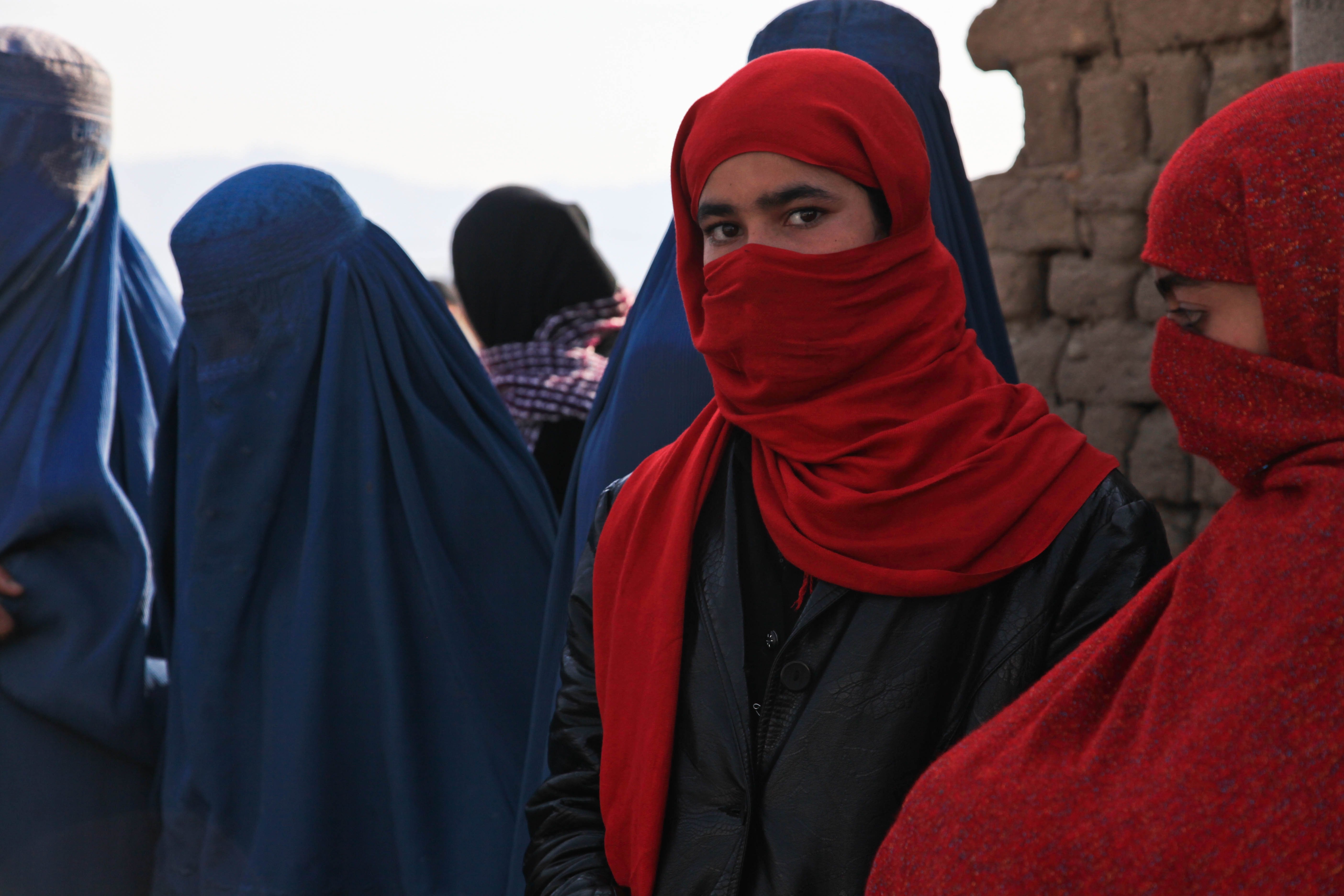
Today, a young Afghan girl approached me with quiet determination and asked for my help. She shared her plan to secretly gather a few teachers to begin educating younger girls up to certain grade levels. Her hope was that once the Taliban are gone, I could help connect her and her students with formal educational authorities so that their efforts would not be lost. She wanted their learning to be recognized, their grades to be formalized, and their years of struggle to be acknowledged.
I had no answer for her. I couldn’t promise her anything, and that broke my heart.
There is a deep pain in knowing you are loved and trusted enough to be asked for help, yet feeling too far away and too powerless to provide it. That sense of powerlessness is its own kind of torture. We are not always free to help those we care about. Sometimes, our solidarity is expressed in silence, sleepless nights, and the ache of what we cannot do—yet still carry within us.
And this poem rose from the ache within me.
In the quiet hours of night,
I carry a weight not easily seen—
not ambition,
but a responsibility
born of pain,
shaped by solidarity.
I have stepped away
from the wounds of my homeland,
but they have never left me.
They linger
in the stillness between thoughts,
in the urgency behind each word I write,
in the faces of women
I can no longer touch
but will never stop reaching for.
What I do is not for myself.
It is for those
whose rights have been rewritten as restrictions,
whose voices are buried beneath decrees.
Their pain is not separate—
it lives inside me.
And from that ache,
action grows.
I write,
I speak,
I research—
not as a distant scholar,
but as one who bleeds
with those she represents.
My work is a return—
not in body,
but in purpose.
If I move,
it must be with them.
If I rise,
it must be to lift them too.
This is not charity—
it is shared survival.
4/5/2025